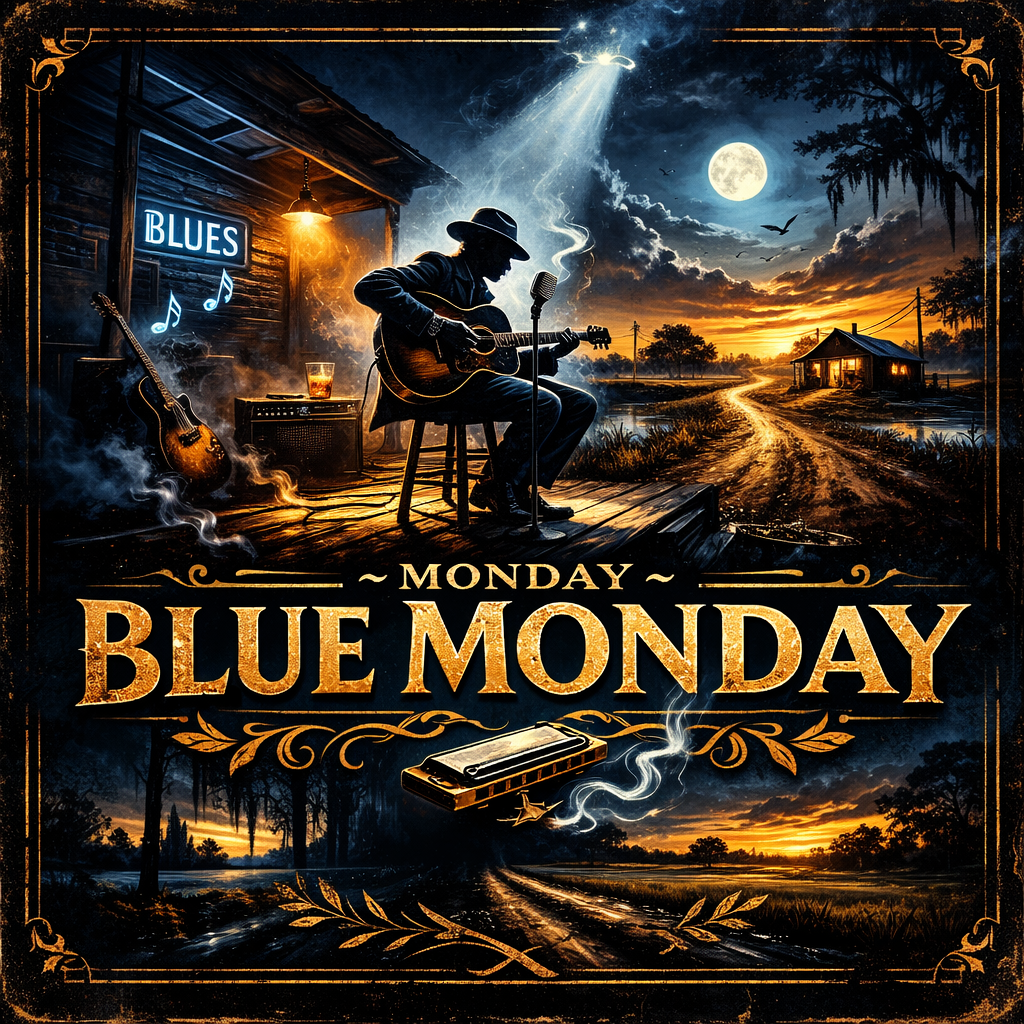
MONDAY ~ BLUE MONDAY
Where It All Began
Before rock and roll. Before country. Before soul. Before any of it — there was the blues.
Not a genre. A confession.
The blues was born in the Mississippi Delta in the late 1800s — in the cotton fields, the juke joints, the chain gangs, and the churches of the Deep South. It was the sound of people who had nothing but their voices and whatever instrument they could get their hands on, turning suffering into something so beautiful it stopped you cold.
It started with a single string. A bent note. A moan that became a melody.
THE DELTA ~ WHERE THE DEVIL MET THE CROSSROADS
Robert Johnson is the ghost that started everything. In the 1930s he recorded 29 songs that changed the world — scratchy 78rpm recordings that somehow contained the entire future of popular music. Every rock guitarist who ever lived owes Robert Johnson a debt they can never repay. Eric Clapton called him the most important blues musician who ever lived. Keith Richards said listening to Robert Johnson for the first time was like hearing two guitarists playing at once.
Johnson sang about hellhounds on his trail. About love in vain. About standing at the crossroads. He died at 27 — the first member of that infamous club — and left behind a legend so powerful that people still argue about whether he sold his soul to the devil to play that well.
He wasn't alone. Charley Patton stomped and hollered before Johnson was born. Son House played slide guitar like a man possessed. Skip James sang in a high lonesome falsetto that sounded like it came from another world entirely.
THE GREAT MIGRATION ~ BLUES GOES ELECTRIC
After World War II something happened that changed everything. Black Americans moved north by the millions — to Chicago, Detroit, St. Louis, Cleveland. They brought the blues with them. And in the clubs and bars of the South Side of Chicago, the blues plugged in and got loud.
Muddy Waters arrived from Mississippi with the Delta in his blood and electricity in his hands. He picked up an electric guitar and invented a whole new language. His band included Little Walter on harmonica — arguably the greatest harmonica player who ever lived — and together they created the Chicago blues sound that would eventually become rock and roll.
Howlin' Wolf had a voice like a freight train derailing. Sonny Boy Williamson played harmonica like he was having an argument with God. Buddy Guy was so intense and so innovative that he made even the great Jimi Hendrix stop and stare.
Chess Records on 2120 South Michigan Avenue in Chicago was the cathedral. Muddy Waters recorded there. Howlin' Wolf. Little Walter. Chuck Berry. Bo Diddley. Everything that came after started on that street corner.
TEXAS ~ WHERE THE BLUES GOT ATTITUDE
Meanwhile down in Texas the blues was developing its own personality. Bigger. Louder. More swagger. T-Bone Walker invented the electric guitar solo as we know it — standing in clubs in Dallas and Houston, holding his guitar behind his head, playing with his teeth, decades before anyone had heard of Jimi Hendrix.
Freddie King played with a ferocity that influenced every Texas guitarist who came after him. Albert Collins was so cold and so precise they called him the Master of the Telecaster.
And then — Stevie Ray Vaughan.
In 1983 Stevie walked onto the stage at the Montreux Jazz Festival and played with a fury that made people forget everything they thought they knew about guitar. He brought the blues back to a generation that had forgotten it existed. He played like Robert Johnson and Jimi Hendrix were fighting for control of his hands. He died too young — in a helicopter crash in 1990 — but not before he reminded the world where all the music came from.
WHY FREE~RANGE RADIO FEATURES THE BLUES EVERY MONDAY
Because without the blues there is no rock and roll. No soul. No R&B. No country as we know it. No jazz evolution. No hip hop. No nothing.
The Rolling Stones were a blues band before they were rock stars. Led Zeppelin was a blues band playing at stadium volume. Eric Clapton spent his entire career chasing the ghost of Robert Johnson. Bonnie Raitt devoted her life to keeping the tradition alive. Jack White built a career on the foundation that Muddy Waters laid.
Every note played on every stage in every genre traces back to a bent string on a cheap guitar somewhere in the Mississippi Delta over a hundred years ago.
That's why we start the week here.
That's why Monday belongs to the blues.
Free~Range Radio — Beyond Sonic Borders 1-877-33VINYL
🎙️
TUESDAY ~ TWANGY TUESDAY
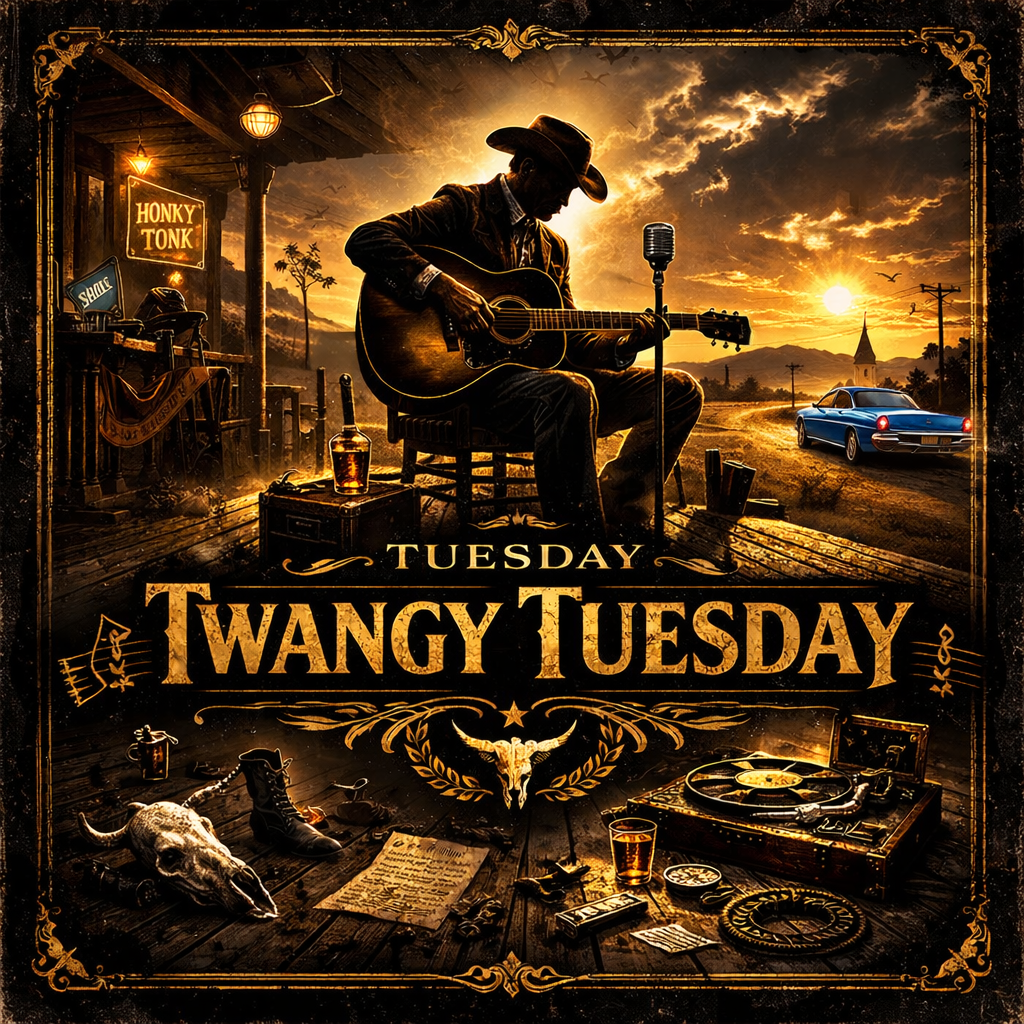
Where Heartbreak Found a Melody
Country music doesn't apologize for anything.
It doesn't pretend life is easy. It doesn't dress up pain in pretty metaphors and hope you don't notice. Country music looks you dead in the eye, pours you a drink, and tells you the truth about love and loss and loneliness and the open road with a directness that no other genre has ever matched.
That's not a limitation. That's a superpower.
THE BIRTH OF A SOUND ~ APPALACHIA TO THE AIRWAVES
Country music grew out of the mountains of Appalachia in the early 1900s — brought over by Scots-Irish and English settlers who carried their fiddles and ballads across the Atlantic and let them evolve in the hills of Kentucky, Tennessee, West Virginia, and the Carolinas.
It was folk music at first. Work songs. Murder ballads. Love songs so lonesome they'd make a stone cry. Passed down by ear, generation to generation, in a musical tradition that had no need for record labels or radio stations because it lived in the people themselves.
Then in 1927 something happened that changed everything.
Ralph Peer set up a recording studio in Bristol, Tennessee — right on the Virginia state line — and in two weeks recorded the music that would define country for the next century. The Carter Family came down from the Virginia mountains with their old time ballads and their tight harmonies. Jimmie Rodgers walked in with a blue yodel that sounded like nothing anyone had ever heard.
Bristol 1927 is country music's Big Bang. Everything came from that room.
HANK WILLIAMS ~THE SHAKESPEARE OF HEARTBREAK
If Robert Johnson is the soul of the blues then Hank Williams is the soul of country music.
Hank grew up poor in Alabama, taught to play guitar by a Black street musician named Rufus Payne — known as Tee-Tot — which tells you everything you need to know about how deeply connected country and blues really are at the root. Two branches of the same tree.
Hank Williams wrote songs that were so simple and so devastating that they felt less like compositions and more like transmissions from somewhere deeper than music. Your Cheatin' Heart. I'm So Lonesome I Could Cry. Cold Cold Heart. Hey Good Lookin'. He wrote them fast, recorded them fast, and lived fast — dying in the back of a Cadillac on New Year's Day 1953 at the age of 29.
He packed more truth into three minutes than most writers put in a lifetime.
Tony Bennett recorded Cold Cold Heart and took it to the pop charts. Ray Charles recorded I Can't Stop Loving You and proved that country and soul were kissing cousins. Hank Williams didn't just write country songs — he wrote human songs that happened to have a steel guitar in them.
THE NASHVILLE SOUND AND THE OUTLAWS WHO REJECTED IT
Through the 1950s and 60s Nashville developed what they called the Nashville Sound — polished, produced, strings added, rough edges sanded off to appeal to the widest possible audience. It was commercial genius and artistic compromise in equal measure.
Some people weren't having it.
Willie Nelson left Nashville in 1972, moved back to Texas, and started making music on his own terms. His album Red Headed Stranger in 1975 was recorded so stripped down and spare that his record label thought it was a demo. It became one of the greatest country albums ever made.
Waylon Jennings put it plainly — he wanted to be free from the Nashville machinery, to record his own songs his own way with his own band. Together he and Willie pioneered the Outlaw Country movement that proved you could be commercially successful AND artistically uncompromising.
Kris Kristofferson was writing songs so good that everyone from Janis Joplin to Johnny Cash was recording them. Merle Haggard was singing about Okie from Muskogee and the working man with a dignity and specificity that felt like journalism set to music.
BUCK, MERLE, DWIGHT AND THE BAKERSFIELD SOUND
Meanwhile out in California's Central Valley a whole other strain of country was developing. Buck Owens and Merle Haggard created the Bakersfield Sound — harder, more electric, less polished than Nashville, with a rawness that felt more honest.
Dwight Yoakam arrived in the 1980s like a time traveler from Bakersfield — all pencil jeans and cowboy hat and a voice that bent notes like Hank Williams reincarnated. He was too country for rock radio and too raw for Nashville radio and he didn't care about either. He made records that sounded like they were recorded in 1957 and released them in 1986 and somehow it was the most modern thing anyone had heard.
WHY FREE~RANGE RADIO FEATURES COUNTRY EVERY TUESDAY
Because country music is American literature set to music.
Because Hank Williams said more about the human condition in three minutes than most novelists say in three hundred pages.
Because the Carter Family preserved a musical tradition that would otherwise have been lost to history.
Because Willie Nelson proved that artistic integrity and commercial success are not mutually exclusive.
Because country music — real country music, not the stadium pop that borrows the name — is about the truth. About actual human lives. About working and loving and losing and getting back up and driving down a long empty road with the windows down and the radio up.
That's why Tuesday belongs to country.
That's why we call it Twangy.
Free~Range Radio ~ Beyond Sonic Borders 1-877-33VINYL
🎙️
WEDNESDAY ~ NEW WAVE WEDNESDAY
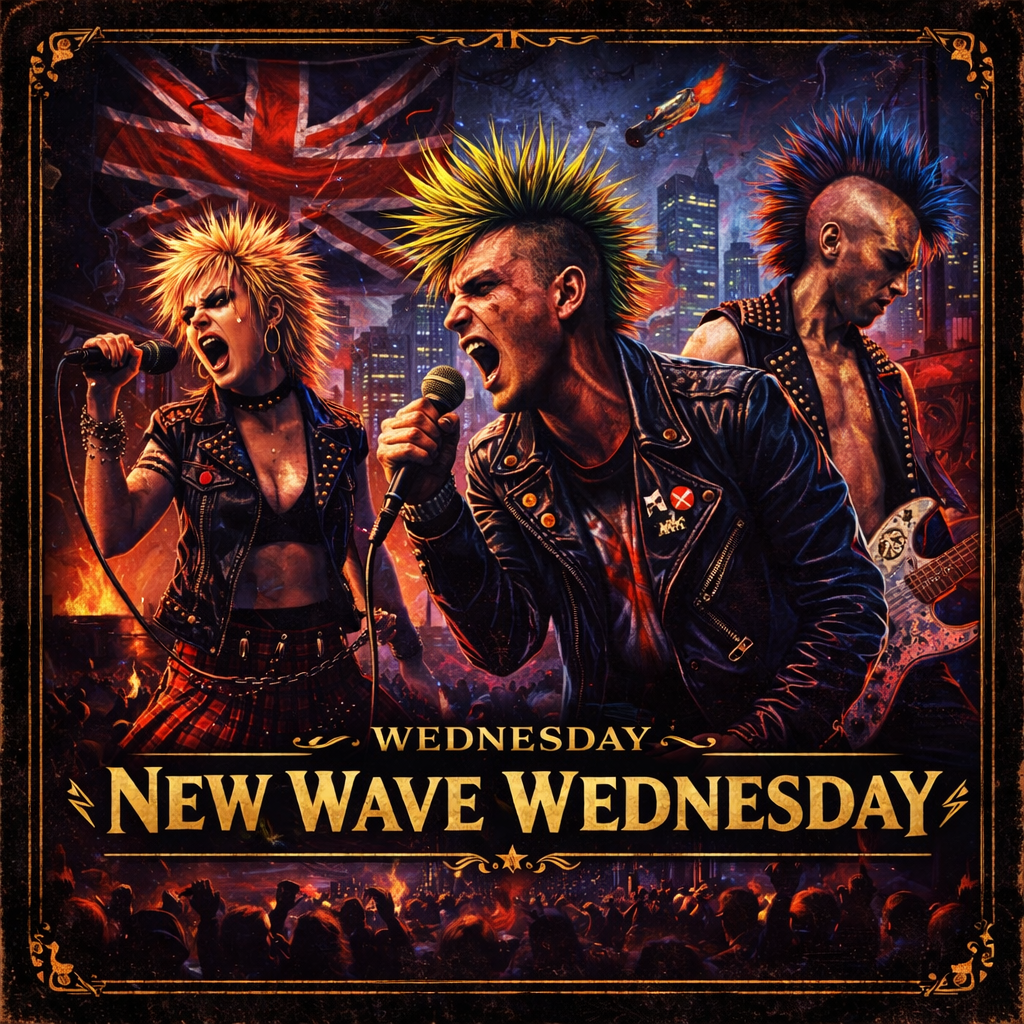
The Rebels Took the Wheel
Here's something Nashville never wanted you to know.
The same raw energy that made Hank Williams bend a note until it bled — the same defiant spirit that made Waylon Jennings tell the music industry exactly where to go — that same electricity ran straight through the veins of every punk rocker who ever ripped a guitar chord in a London squat or a New York basement.
The rebels always find each other across time.
THE MISSING LINK ~ ROCKABILLY
Before punk there was rockabilly. And rockabilly is where Tuesday bleeds into Wednesday.
When Elvis Presley walked into Sun Studio in Memphis in 1954 and started playing country songs with a Black rhythm and blues feel, he wasn't just making music — he was detonating a bomb. Sam Phillips had been looking for exactly this — a white kid who could feel the music the way Black artists felt it and translate it for a segregated market that wasn't ready to hear the original.
What came out was something nobody had a name for yet. Too wild for country radio. Too country for rhythm and blues. Too everything for anyone comfortable.
Carl Perkins wrote Blue Suede Shoes and played it with a ferocity that sounded less like a country song and more like a threat. Jerry Lee Lewis sat down at a piano and played like the devil had personally given him lessons — all left hand thunder and right hand lightning and a stage presence so dangerous that they eventually banned him from television.
Eddie Cochran was singing about teenage frustration with an electric guitar tone so raw and aggressive that the kids who heard it twenty years later in London and started punk bands didn't realize they were channeling 1958 Memphis.
Gene Vincent had a backing band called the Blue Caps who played so hard and so fast that the music barely held together — which was entirely the point.
Rockabilly was the first punk rock. It just wore cowboy boots instead of safety pins.
NEW YORK ~ WHERE THE SEEDS WERE PLANTED
Fast forward to New York City in the early 1970s. The city is broke. The streets are dangerous. And in a bar on the Bowery called CBGB something is happening that nobody has a name for yet.
Television were playing guitar music so angular and intellectual it made jazz musicians pay attention. Richard Hell invented the torn t-shirt and safety pin aesthetic that Malcolm McLaren would take to London and sell as punk rock. Patti Smith was combining rock and roll with beat poetry in a way that felt like Rimbaud had picked up a Fender Stratocaster.
And the Ramones — four kids from Queens who could barely play their instruments and didn't care — stripped rock and roll down to its absolute skeleton. Two minutes. Four chords. No solos. No fat. No compromise. Just pure velocity and attitude delivered with a leather jacket and a sneer.
The Ramones played their first show at CBGB in 1974. By the time a British band called the Sex Pistols played their first show in 1975 the fuse had already been lit in New York.
LONDON ~ WHERE THE BOMB WENT OFF
Britain in 1976 was a mess. Unemployment. Strikes. A sense among young working class kids that the future had been canceled before they got a chance to participate in it. The progressive rock bands that dominated the charts — Yes, Emerson Lake and Palmer, Genesis — were making music so technically complex and conceptually elaborate that it felt like it had nothing to do with anyone's actual life.
Something had to break.
The Sex Pistols broke it.
Malcolm McLaren had been to New York. He'd seen Richard Hell. He'd absorbed the aesthetic and brought it home to London and found four kids — Johnny Rotten, Steve Jones, Paul Cook, and Glen Matlock — who had the anger and the attitude to weaponize it.
Never Mind the Bollocks Here's the Sex Pistols came out in 1977 and it was less an album than a declaration of war. Against the music industry. Against the establishment. Against comfort and complacency and the idea that rock and roll had to be polished and professional and safe.
The Clash took it further. Where the Sex Pistols were a Molotov cocktail the Clash were a manifesto. Joe Strummer brought a political consciousness and a musical curiosity — reggae, ska, rockabilly, soul — that transformed punk from a gesture into a movement. London Calling is not just one of the greatest punk albums ever made — it's one of the greatest albums ever made period.
The Damned. The Buzzcocks. Siouxsie and the Banshees. X-Ray Spex. Each band took the raw material of punk and pushed it somewhere new and different and personal.
GLAM ~ THE GLAMOROUS ANCESTOR
But wait. Before punk there was glam. And glam matters because it gave punk its theatrical DNA.
David Bowie created Ziggy Stardust in 1972 — a fictional alien rock star who became so real that Bowie himself had trouble separating from the character. He wore platform boots and outrageous costumes and sang about sexuality and identity and alienation with a sophistication that made the music simultaneously art and entertainment.
Marc Bolan of T. Rex was writing bubblegum songs with mystical imagery and playing them on electric guitars with such effortless cool that he invented glam rock almost by accident.
Roxy Music and their leader Bryan Ferry combined avant-garde art school sensibility with pure pop songwriting in a way that pointed directly toward the sophisticated new wave that was coming.
Lou Reed had already spent the late 1960s with the Velvet Underground making music so dark and so uncompromising that almost nobody bought it at the time — but as Brian Eno famously said everyone who did buy it started a band.
POST-PUNK ~ THE MORNING AFTER THE REVOLUTION
By 1978 punk had burned itself out — or rather it had evolved into something more interesting.
Post-punk was what happened when punk musicians started asking what comes next. What if we take this energy and this attitude and apply it to something more musically sophisticated? What if we bring in reggae and dub? What if we experiment with electronics? What if we slow it down and make it dark?
Joy Division answered those questions in the most devastating way possible. Ian Curtis sang about disorder and dislocation with an intensity that felt less like performance and more like transmission. Their album Unknown Pleasures — released in 1979 with that iconic pulsar wave cover — sounded like nothing that had existed before it. When Curtis died in 1980 the remaining members became New Order and invented an entirely different future.
The Cure took post-punk and drenched it in reverb and melancholy and Robert Smith's extraordinary melodic gift to create something that was simultaneously deeply depressing and impossibly beautiful.
Gang of Four stripped funk down to its angular bones and rebuilt it as political post-punk — guitars that sounded like arguments, bass lines that demanded you dance against your will.
Wire made punk so minimal and so conceptual that it almost disappeared — and in doing so invented a template for alternative rock that bands are still using today.
NEW WAVE ~ WHERE THE ART SCHOOL KIDS TOOK OVER
New wave was post-punk putting on better clothes and going to a party.
Talking Heads were art school students from Rhode Island who moved to New York and combined punk energy with African rhythms and David Byrne's genuinely strange conceptual vision. Their album Remain in Light in 1980 — produced with Brian Eno — was so ahead of its time that popular music is still catching up to it.
Elvis Costello arrived in 1977 wearing thick glasses and an angry expression and proceeded to write some of the most literate and melodically sophisticated pop songs since the Beatles. He was punk in attitude and Brill Building in execution and the combination was irresistible.
Blondie took punk energy and applied it to pop songwriting and disco rhythms and Debbie Harry's ice cool charisma and created radio hits that sounded effortless and were anything but.
The Police combined punk, reggae, and jazz with Sting's classical training and Andy Summers' art rock guitar sensibility to create something that was simultaneously underground credible and massively commercial.
SYNTH-POP ~ THE FUTURE ARRIVED
And then the synthesizers arrived and everything changed again.
Gary Numan recorded Cars in 1979 and sounded like he was broadcasting from a dystopian future. Kraftwerk — four Germans from Düsseldorf — had been making purely electronic music since the early 1970s and their influence was so profound that it's impossible to overstate it. Every synth-pop band, every hip hop producer, every electronic musician since owes them a fundamental debt.
Depeche Mode took Kraftwerk's electronic blueprint and added a dark romanticism and Dave Gahan's theatrical baritone that somehow made cold electronic music feel warm and emotionally devastating. Their albums from the mid-1980s onward are among the most emotionally powerful recordings in rock history.
New Order were making dance music with rock band instrumentation before anyone had a name for what they were doing. Blue Monday — released in 1983 — is one of the best-selling twelve inch singles in history and it sounds as fresh and as vital today as the day it was released.
The Human League. OMD. Soft Cell. Heaven 17. A Flock of Seagulls. Each band was inventing a new sonic vocabulary using instruments that hadn't existed a decade earlier.
WHY FREE~RANGE RADIO FEATURES THIS MUSIC EVERY WEDNESDAY
Because the line from Hank Williams to Johnny Rotten to Ian Curtis to Dave Gahan is not a broken line — it's a direct one.
Because every generation of rebels finds the music of the previous generation of rebels and uses it as fuel.
Because rockabilly gave punk its speed. Glam gave it its theater. Blues gave it its soul. And all of it together created a fifty year revolution in sound that changed what it meant to be young and alive and angry and electric.
Because Wednesday is the middle of the week and the middle of the week needs something with an edge.
Because the rebels always deserve their day.
Free~Range Radio ~ Beyond Sonic Borders 1-877-33VINYL
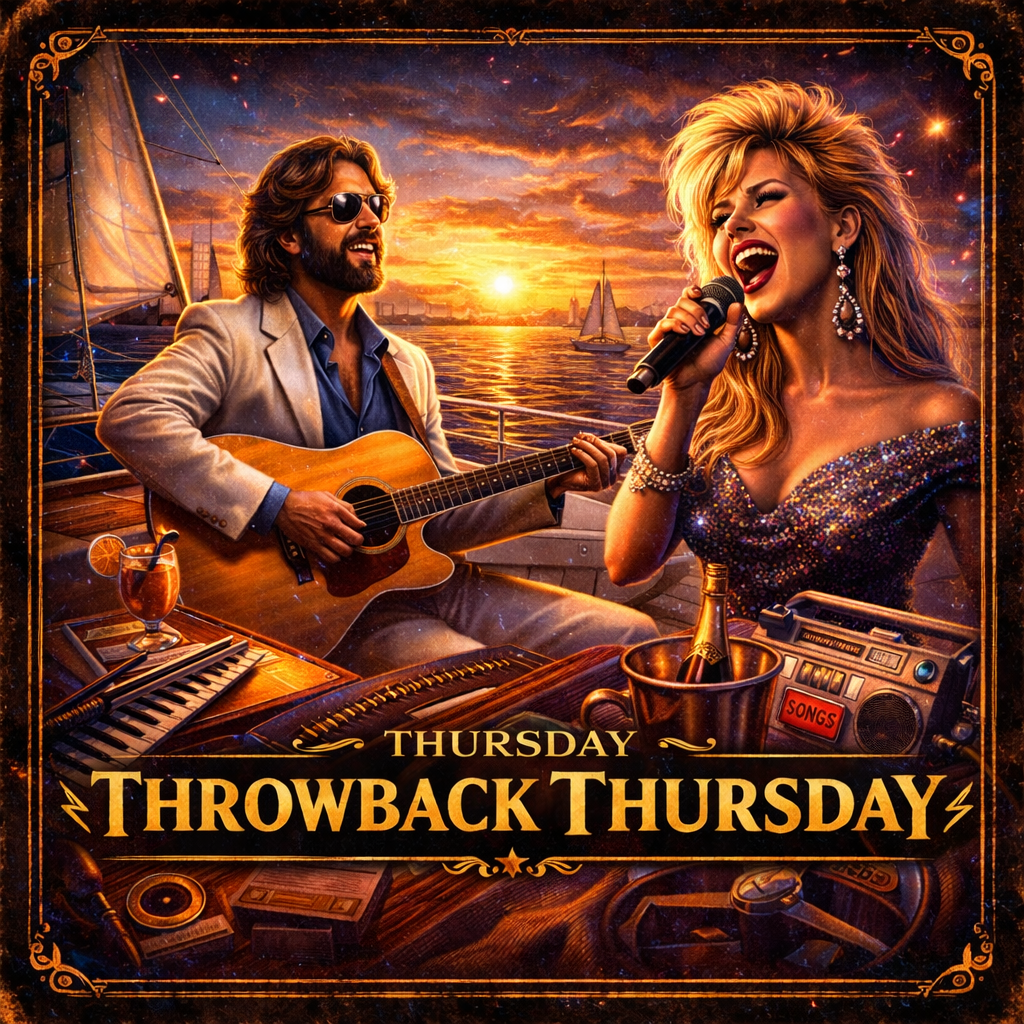
THURSDAY ~ THROWBACK THURSDAY
The Songs Everyone Knows and Nobody Admits They Love
Wednesday burned it all down.
The punks tore up the rulebook. The new wavers rebuilt it with synthesizers and attitude. The post-punkers made darkness beautiful. By Wednesday night the revolution was complete and the rebels were exhausted and ready for a drink.
And that's when Thursday walks in.
Thursday doesn't apologize for anything either. Thursday just turns up the radio — the real radio, the AM radio, the FM radio, the radio your parents had in the kitchen and your older sister had in her bedroom — and lets the songs do what songs were always meant to do.
Make you feel good. Make you sing along. Make you forget for three minutes and thirty seconds that the world is complicated and difficult and exhausting.
Thursday is the bridge. The exhale. The moment between the revolution and the weekend. And it is absolutely unapologetic about every single second of it.
AM GOLD ~ THE ORIGINAL GUILTY PLEASURE
Before FM. Before album rock. Before any of it — there was AM radio.
AM radio in the late 1960s and early 1970s was the most democratic music delivery system ever invented. You turned the dial and out came everything — pop, soul, country crossovers, bubblegum, soft rock, novelty songs, teenage symphonies to God — all crammed together in glorious three minute chunks separated by jingles and DJ patter and car commercials.
Nobody called it AM Gold at the time. They just called it the radio.
Tony Orlando and Dawn were singing Knock Three Times and it was number one and everybody was singing it even the people who claimed they weren't. The Carpenters — Karen's voice so pure and so heartbreaking it almost hurt to listen — were selling more records than almost anyone on earth while the rock critics pretended they didn't exist.
Three Dog Night were taking songs written by obscure singer-songwriters and turning them into massive hits. Bread were making soft rock so smooth and so melodically perfect that even now Joy to the World or Everything I Own stops you cold when it comes on the radio. Jim Croce was writing short story songs — Operator, Time in a Bottle, Bad Bad Leroy Brown — with a narrative precision that any novelist would envy.
These were not lesser songs. They were just songs that prioritized the listener's pleasure over the artist's statement. And there is nothing wrong with that. There never was.
THE ONE HIT WONDERS ~ HERE TODAY GONE TOMORROW LEGENDARY FOREVER
Thursday is also the home of the one hit wonder. And the one hit wonder deserves more respect than it gets.
Think about it this way. Most artists make entire careers and never write one song that anyone remembers twenty years later. The one hit wonder wrote exactly one song that people are still humming fifty years on. Who won that game?
Zager and Evans recorded In the Year 2525 in 1969 — a dystopian sci-fi epic that went to number one and then the duo essentially vanished. But that song? That song is still haunting people.
Pilot recorded Magic in 1974 — one of the most perfectly constructed pop songs ever committed to tape — and then disappeared into history. But Magic never disappeared. It just keeps showing up.
Carl Douglas recorded Kung Fu Fighting in 1974 as a B-side. A B-side. The A-side is forgotten. The B-side is immortal.
Dexy's Midnight Runners recorded Come On Eileen in 1982 and it became one of the best-selling singles in British history and then — poof. Gone. But Come On Eileen never goes away. It shows up at every wedding, every party, every moment when people need to stop thinking and start moving.
The one hit wonder is Thursday's secret weapon. The song that comes on and makes everyone in the room stop and say — oh my God I LOVE this song — and then immediately say — wait who did this again?
FM GOLD AND THE SOFT ROCK REVOLUTION
By the mid-1970s FM radio had taken over from AM as the home of serious rock music. Album-oriented rock — AOR — gave artists the freedom to make longer, more complex music for an audience that was willing to sit and listen.
But FM also gave birth to something else entirely. Something smoother. Something that lived in the space between rock and pop and easy listening — sophisticated enough for the FM dial but melodic enough for everyone.
Soft rock.
James Taylor was writing confessional singer-songwriter folk rock that felt like therapy set to music. Carole King's Tapestry album in 1971 sold millions and millions of copies because it spoke directly and honestly about love and loss and friendship in language that felt completely real.
Fleetwood Mac's Rumours in 1977 is one of the most extraordinary documents in pop music history — five people in various states of romantic collapse with each other, making an album about love and betrayal and heartbreak that somehow sounds effortless and joyful and devastating all at once. It has sold over forty million copies. It will never stop selling.
Linda Ronstadt was one of the greatest vocalists of her generation, moving between rock and country and pop and Mexican folk music with a ease that made it look simple and wasn't.
The Eagles were writing songs about California and freedom and the dark side of the American dream with harmonies so perfect they sounded engineered in a laboratory. Hotel California is one of the most analyzed songs in American music — and it still sounds incredible at full volume with the windows down.
YACHT ROCK ~ THE MOST MISUNDERSTOOD GENRE IN HISTORY
And then there's yacht rock.
The term was originally meant as a joke — an affectionate mockery of the smooth, polished, sophisticated West Coast pop and soft rock of the late 1970s and early 1980s. The image was of wealthy professionals on sailboats drinking white wine and nodding appreciatively to songs about love and the ocean.
But here's what the joke missed — the music was extraordinary.
Steely Dan were two of the most technically sophisticated musicians and songwriters in popular music history — Walter Becker and Donald Fagen — who combined jazz harmony, impeccable studio production, and deeply sardonic lyrics about the moral bankruptcy of American life into pop songs so smooth and so perfectly constructed that you could listen to them a hundred times and still notice something new. Deacon Blues. Reelin' in the Years. Aja. These are not guilty pleasures. These are masterpieces.
Michael McDonald had a voice — that warm, deep, slightly rough baritone — that should be classified as a natural wonder. What a Fool Believes is one of the most harmonically complex songs ever to reach number one on the pop charts. It just happens to sound like it belongs on a boat.
Christopher Cross won four Grammy Awards in 1981 including Album of the Year and Record of the Year and Song of the Year. His song Sailing is so smooth and so perfectly realized that it practically floats. The backlash came quickly. The music has outlasted the backlash by decades.
Hall and Oates were the best-selling duo in American music history — and they were funky and soulful and melodically irresistible in ways that their reputation as a soft rock act consistently undersells. Sara Smile. She's Gone. Rich Girl. Private Eyes. Out of Touch. These songs are bulletproof.
Kenny Loggins kept showing up. Footloose. Danger Zone. I'm Alright. Whenever a movie needed a perfect pop song Kenny Loggins materialized with exactly the right one. This is not an accident. This is craft.
GUILTY PLEASURES ~ THE SONGS YOU SING ALONE IN THE CAR
Thursday is also the home of the song you love when nobody's watching.
The song that comes on in the grocery store and you stop pretending to read labels and just stand there listening. The song that you skip past on your playlist in public but play on repeat in private. The song that your cooler friends would make fun of you for loving and you love it anyway.
Air Supply. Making love out of nothing at all at full volume in the car. Don't pretend you don't know every single word.
Toto's Africa — a song about a man who has never been to Africa, written by people who had never been to Africa, that became so beloved that a group of artists actually set up speakers in the Namibian desert to play it on a loop forever. That happened. That is real.
Richard Marx. Right Here Waiting. Rick Astley. Never Gonna Give You Up — which started as a genuine pop hit, became an internet meme, and has now circled back around to being genuinely beloved again. The song was always good. The internet just reminded us.
Starship. We Built This City — frequently voted the worst song ever recorded. Also genuinely impossible to get out of your head once it's in there. That is a superpower not a flaw.
HOW THURSDAY PRIMES THE PUMP FOR FRIDAY
Here's the genius of where Thursday sits in the Musical Evolution Week.
Wednesday left you energized and slightly overwhelmed. The punk revolution. The synth explosions. The post-punk darkness. The new wave sophistication. It was a lot. Wednesday was a full meal.
Thursday is the palate cleanser that somehow also fills you up all over again.
By the time Thursday's playlist moves from soft rock into late 1970s pop into early 1980s FM gold — by the time the songs are getting bigger and more energetic and more danceable — by the time the one hit wonders are stacking up and the guilty pleasures are making everyone in the room smile — you realize something is building.
The energy is rising. The mood is lifting. The week is accelerating.
And then Thursday's final hour — late period pop, early AOR, the biggest anthems of the era — tips over into something that sounds a lot like what's coming on Friday.
Thursday is the runway. Friday is the takeoff.
By Thursday night you're not just ready for the weekend. You're desperate for it.
Free~Range Radio ~ Beyond Sonic Borders 1-877-33VINYL
🎙️